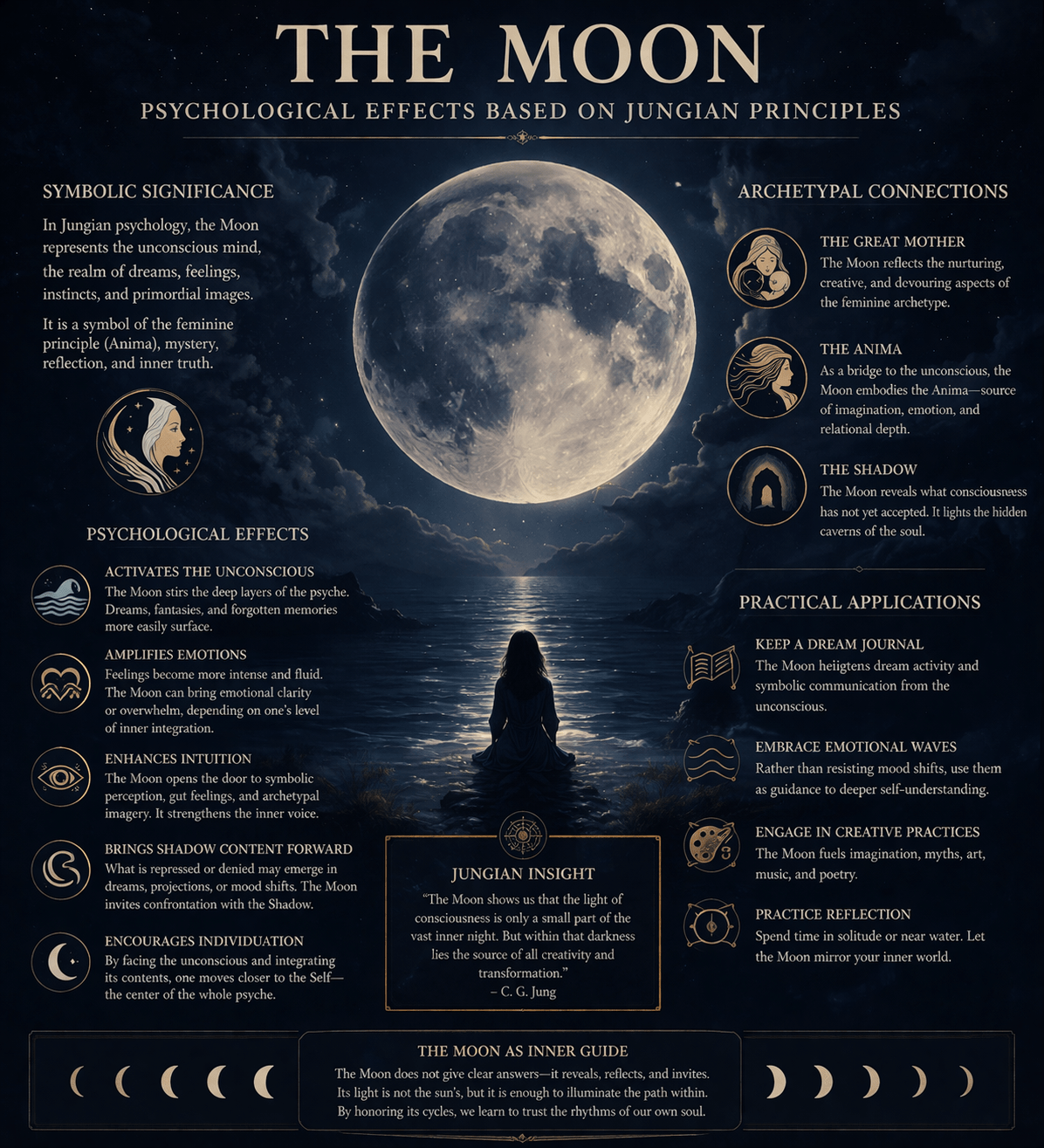
In astrology, the Moon is often underestimated, yet it plays a central role in daily consciousness, self‑image, and emotional life. The Moon represents the ego—not as something to eliminate, but as the necessary focusing lens that gives us a coherent sense of self. Through its sign, house placement, aspects, and nodal axis, the Moon describes how we consciously experience ourselves, how secure we feel, and how we form personal identity.
A key distinction is between how we see ourselves (Moon) and how others perceive us (Ascendant). The Ascendant reflects instinctive self‑projection, while the Moon reflects conscious self‑awareness. Tension between the two can create misunderstandings about the relationship between inner experience and outward appearance.
The Moon governs emotions, not feelings. Feelings are immediate responses associated with Venus, while emotions develop afterward and run deeper. The quality of one’s emotional life varies greatly by Moon sign and configuration and directly influences self‑image and behavior.
Security is a central lunar theme. Humans seek self‑consistency to feel safe, but this can lead to resistance to growth. The Moon contains a paradox: the need for stability and the need for change. True growth requires developing inner security, reducing dependence on external validation, and accepting emotional change as part of life.
The Moon also governs imagination and the ability to envision different realities. Imaging allows emotional adaptation to change before it is acted upon, providing both a safety valve and a catalyst for growth. This capacity influences self‑image, emotional health, and openness to transformation.
Another lunar function is the integration of the anima and animus—the masculine and feminine qualities within each person. Early parental and social conditioning often shape emotional patterns and gender identity, but growth requires integrating both polarities consciously.
Vulnerability, nurturing, and protection are also lunar functions. The Moon describes sensitivity to the environment, how we protect ourselves emotionally, and how we nurture both ourselves and others. These patterns are strongly influenced by childhood experiences, especially with the mother or primary caregiver.
The Moon reflects the “inner child.” Healthy development allows for vulnerability, trust, and emotional expression, while unresolved imprints can lead to dependency, insecurity, or emotional stagnation.
Finally, the Sun–Moon relationship describes the self‑actualization process—how purpose is lived day‑to‑day. Moon phases indicate how individuals grow, learn, and integrate experience. The progressed Moon marks the leading edge of emotional and psychological development, showing where conscious focus and growth are occurring at any given time.